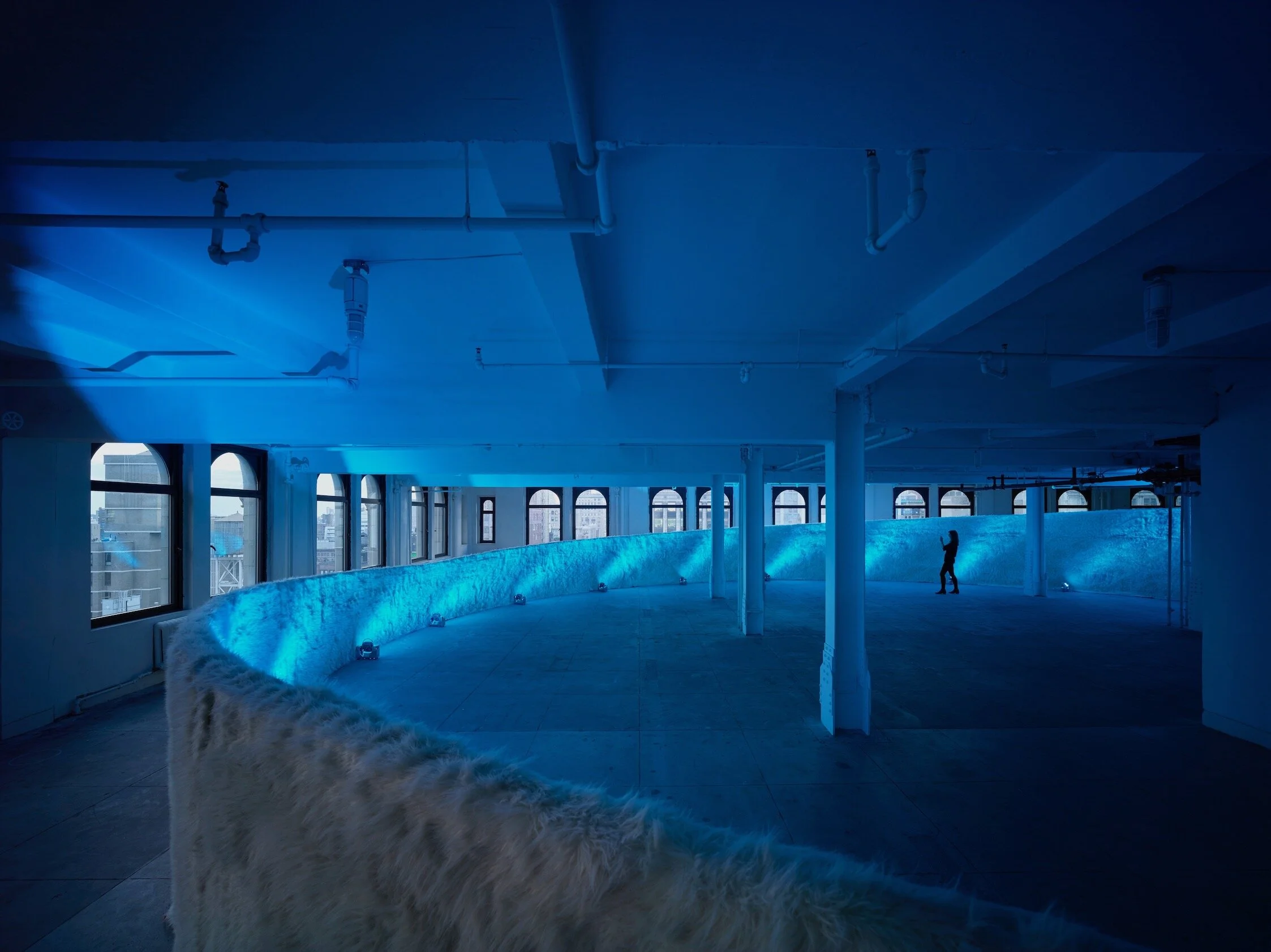
How does data taste, smell, feel, and sound?
What moves you? The patterns of we, me inform.
This exhibit engaged the community in a year-long research project exploring how artificial intelligence and digital images change human behavior.
First, I partnered with a statistician to investigate how a causal algorithm fed by billions of digital actions, signifiers of microcultures, could predict how different images alter behavior. We were constantly iterating, a process of play and discovery that resulted in showing 30,000 people a bird I drew.
Second, I asked avant-garde musician Elliot Sharp to create musical representations of counterfactual worlds, a concept central to causal inference. A counterfactual world exists ‘but for’ some element that happened in the past. E#’s final piece repeatedly played patterns of music, eliminating sounds with each repetition and radically altering the reality.
Thick text inspired by Barbara Kruger covered the bathroom walls and read: THE PATTERNS OF ME, WE (IN) FORM. Mirrors played a central role: when an individual stood in front of the mirror to wash their hands, the ME text on the wall read WE in the reflection.
470 Park Avenue South.